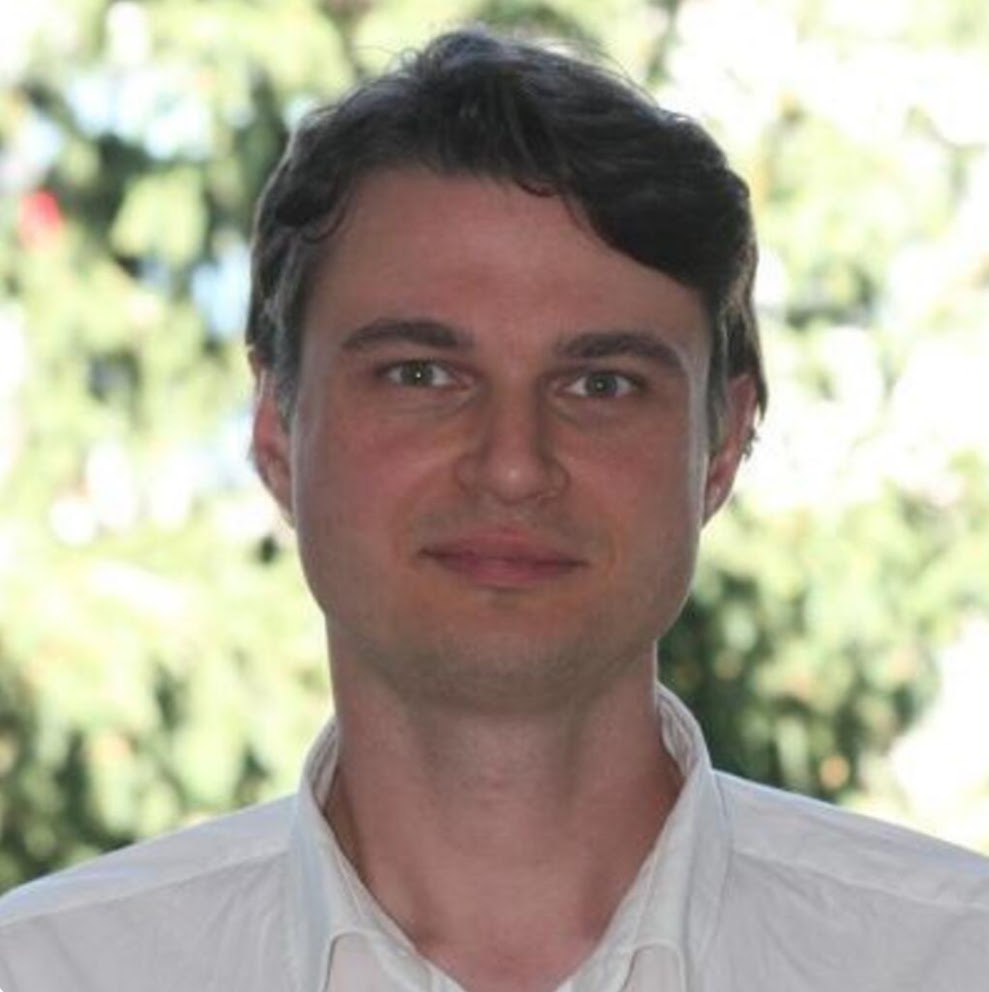
On October 22, 2026, I was the guest at a live meetup of the CoTransition – Agile Management community at Campus X (VISA Innovation Hub) in Sofia. The evening was about the difference between chaotic experiments with prompts and building Claude Code into everyday engineering work, with real examples from my work at Ship.Cars USA, followed by Q&A and discussion.


I opened with a short talk: Coding with AI Agents.
The main idea fits in one line:
Hand over the whole task. Give it a way to check. Own what ships.
The Slides
You can get the deck in three formats:
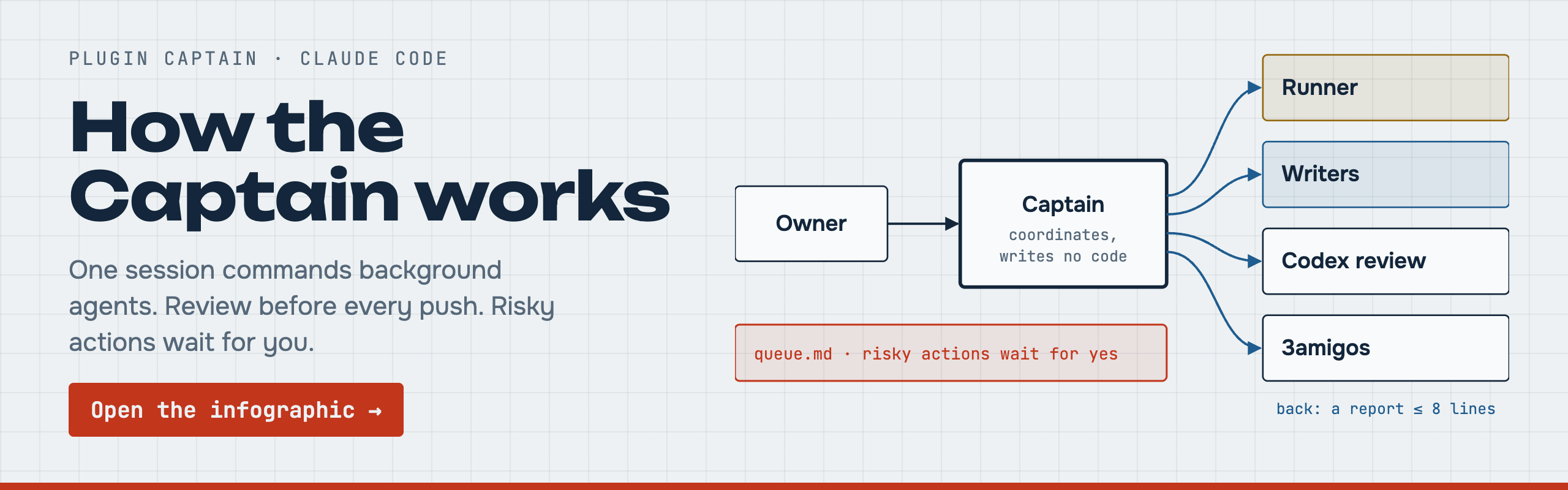
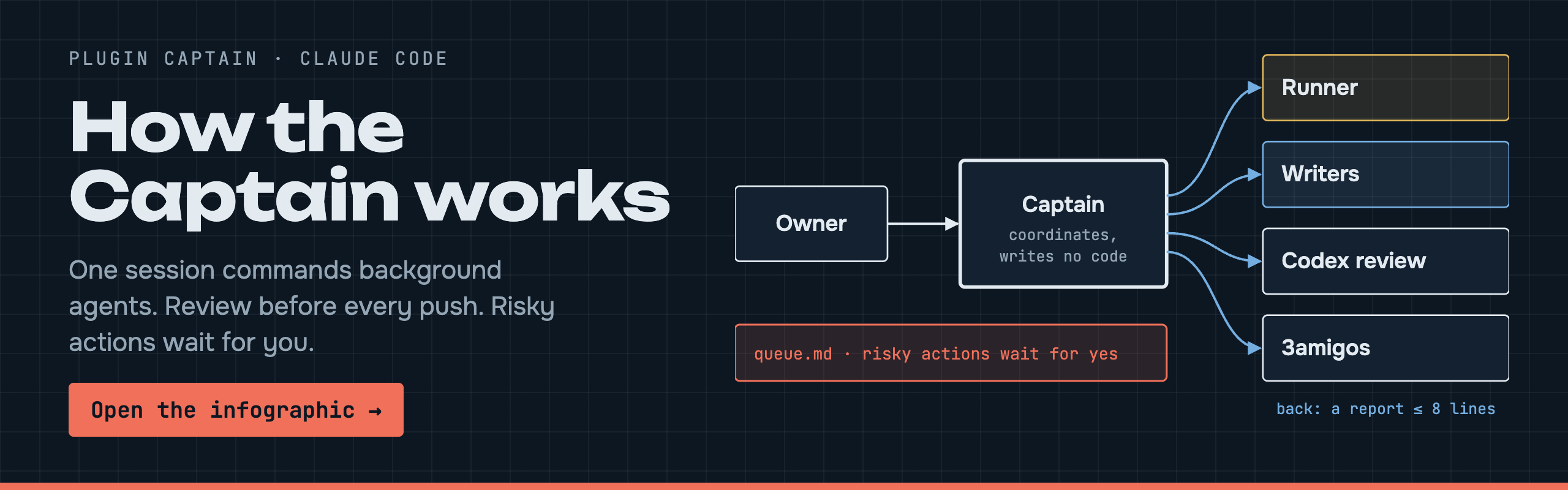
I also showed Captain – a Claude Code plugin where one session commands a crew of background agents. It splits the work, runs the agents in parallel, sends every diff to review and asks you only about what matters.
What Changed: Less Prompting, Not More
The new models need less prompting, not more:
- Start at medium effort. Go higher only when you measure a real gain.
- Long autonomous runs work – hours, if the agent has a clear finish line.
- Big context – 500K to 1M tokens, depending on the model, and thinking is built in.
So you can delete lines like “think carefully”, “double-check your answer” or “use a subagent to verify” from your prompts.
Three Habits for Every Session
- Whole task, clear finish line. For example: “Done means: every endpoint migrated, old client deleted, tests pass.”
- Turn the effort dial, skip “think hard”. Modern models always think. The effort setting decides how much.
- Read “needs your decision” first. Put short IDs on every question, so you can answer “Q2 yes, OP1 no”.
Ten Steps, One Loop
The workflow is not tied to one tool. It works with Claude Code and with GitHub Copilot.
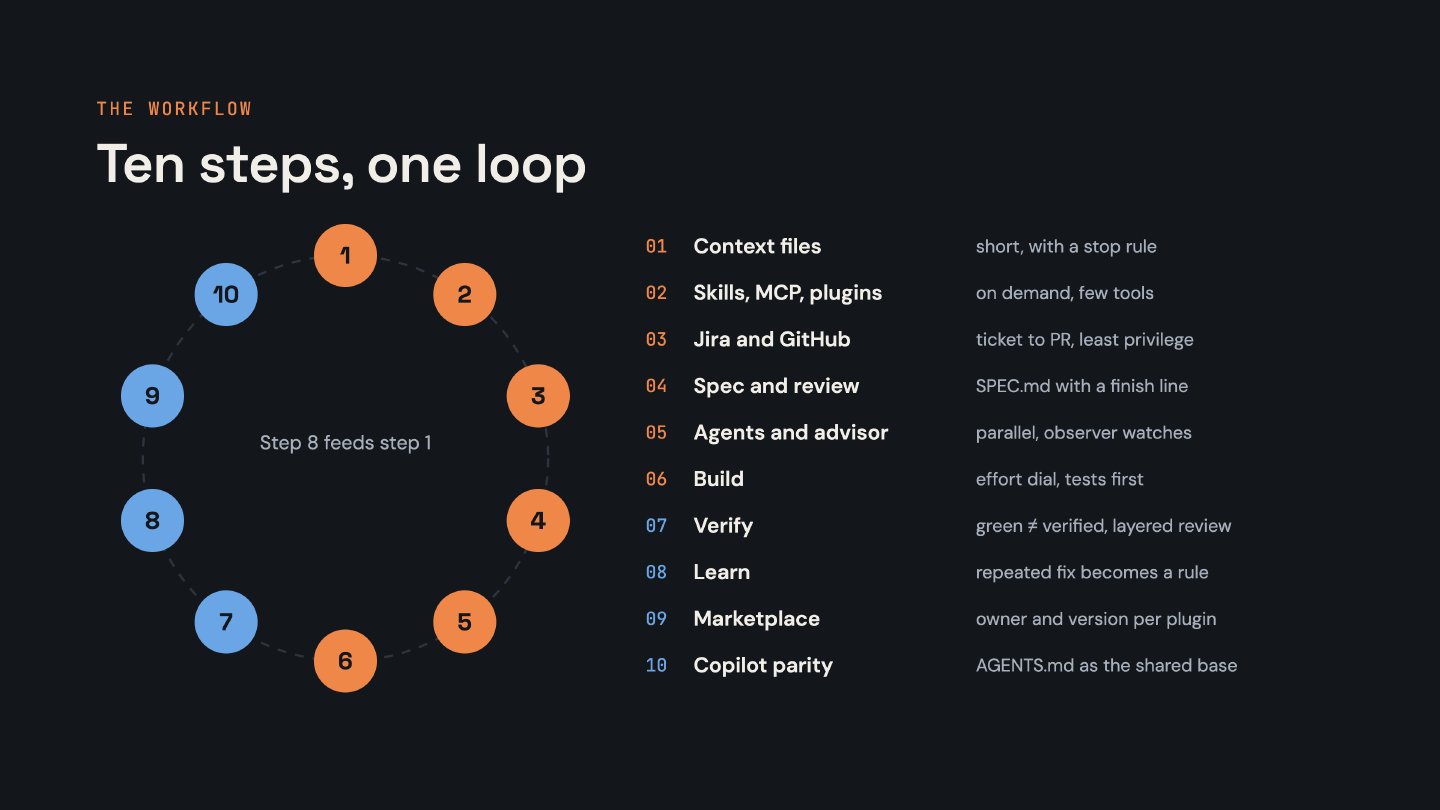
- Context files – short, with a stop rule. Test each line: would removing it cause a mistake? If not, cut it.
- Skills, MCP, plugins – loaded on demand, few tools. Context is the scarce resource. Prefer
CLI tools like
ghandgcloud, and vet every plugin like a package. - Jira and GitHub – from ticket to pull request, with least-privilege tokens. The agent drafts; a human merges and changes statuses.
- Spec and review – a
SPEC.mdwith a finish line. Let Claude interview you, then build it in a fresh session. - Agents and advisor – delegate big work in parallel, and let an observer agent watch for silent decisions and false success.
- Build – tests first, a
TASKS.mdthat survives compaction, and hooks that lint and test every change. - Verify – green is not the same as verified. Review in layers, not in one gate.
- Learn – a repeated correction becomes a rule in
CLAUDE.md, a skill, a hook or a lint rule. - Marketplace – package what works as a private plugin, with an owner and a version.
- Copilot parity –
AGENTS.mdas the shared base for Claude Code and Copilot.
Step 8 feeds step 1, so the loop gets better every time.
Tell It When to Stop
One rule I always add to every CLAUDE.md is a stop rule. Keep going when nothing needs you. Stop
and ask when the agent is blocked, or before anything destructive.
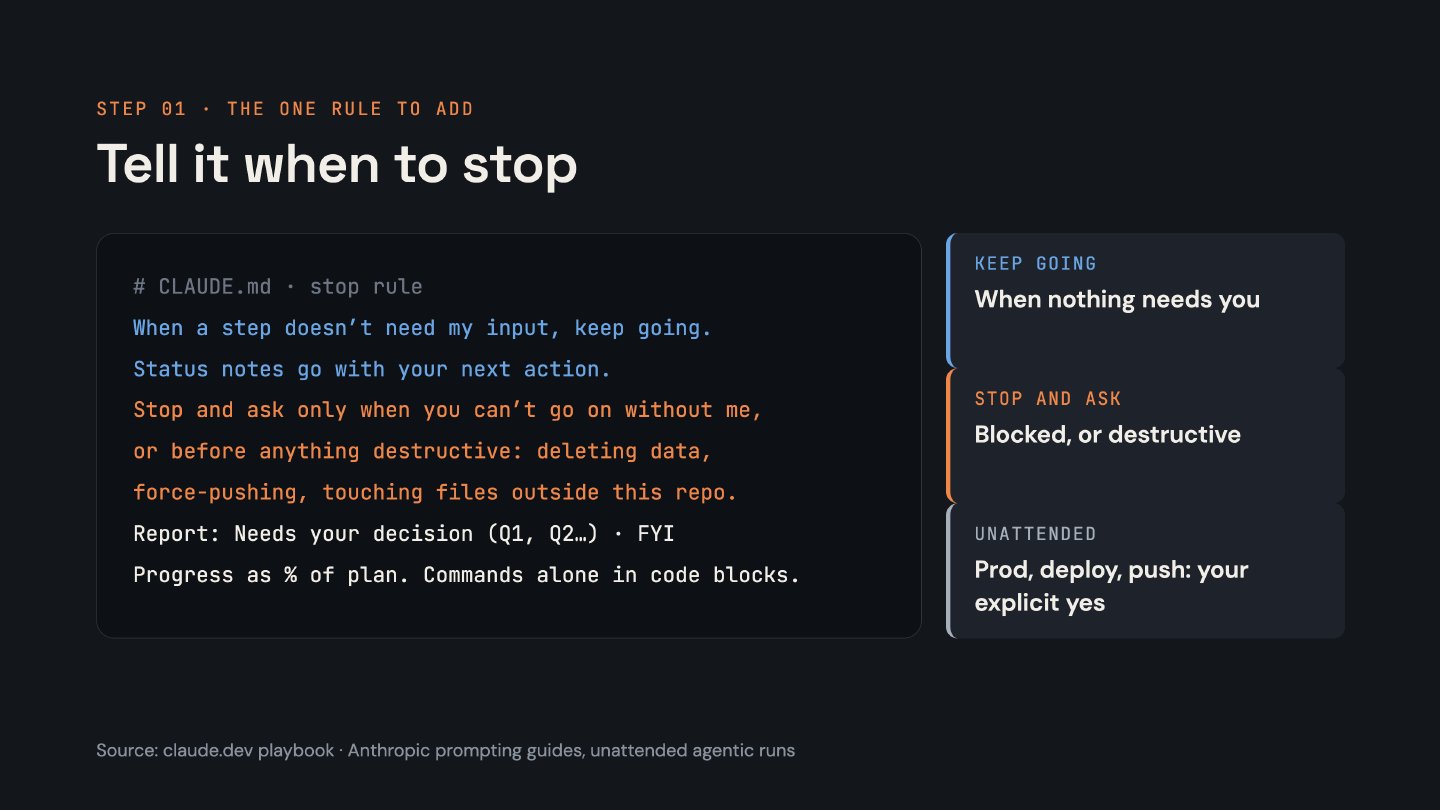
Production, deploy and push always need your explicit yes.
People Where the Risk Is
Not every change needs the same review. The change sets the tier, not the author:
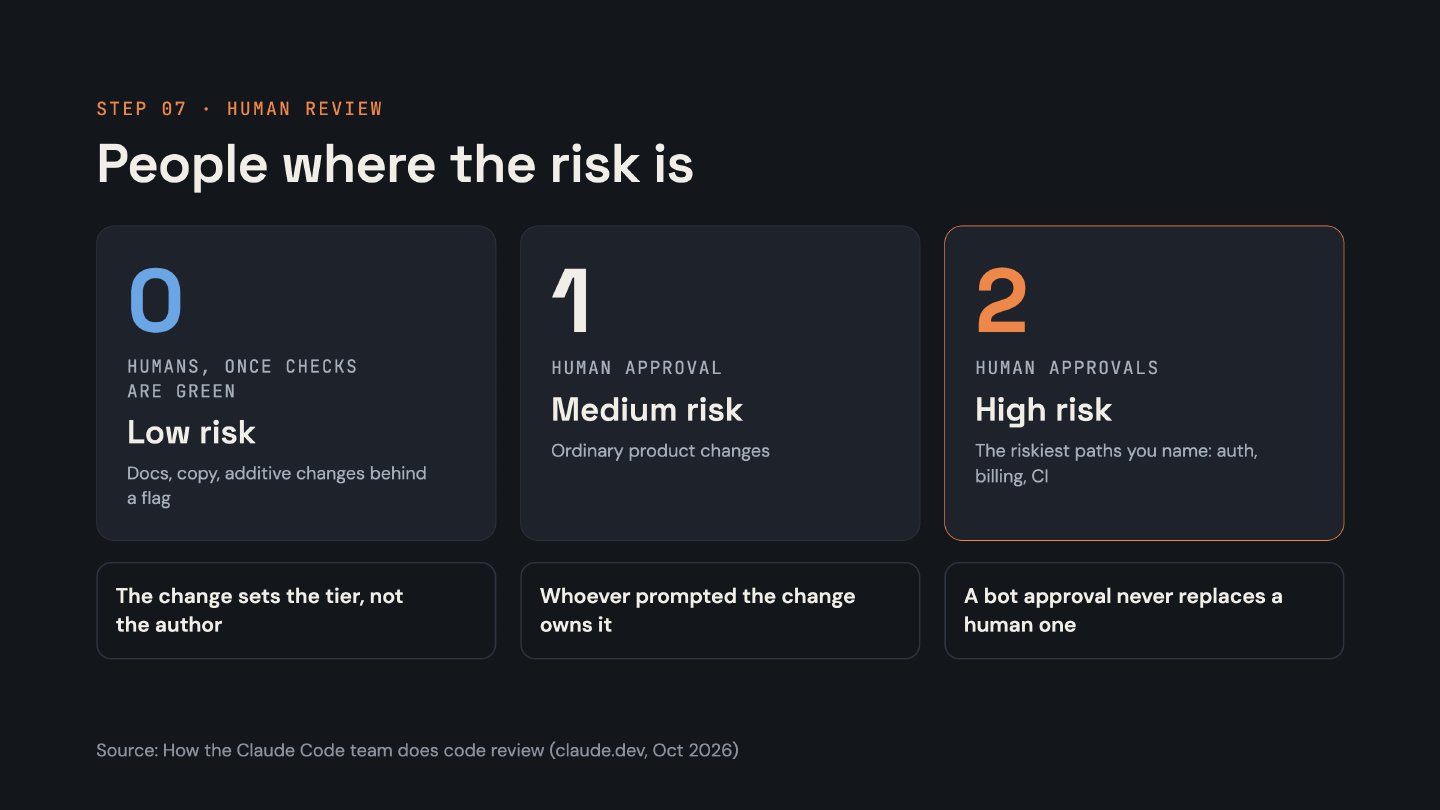
- Low risk – docs, copy, additive changes behind a flag: no human once the checks are green.
- Medium risk – ordinary product changes: one human approval.
- High risk – auth, billing, CI and the other risky paths you name: two human approvals.
Whoever prompted the change owns it. A bot approval never replaces a human one.
Your Checklist
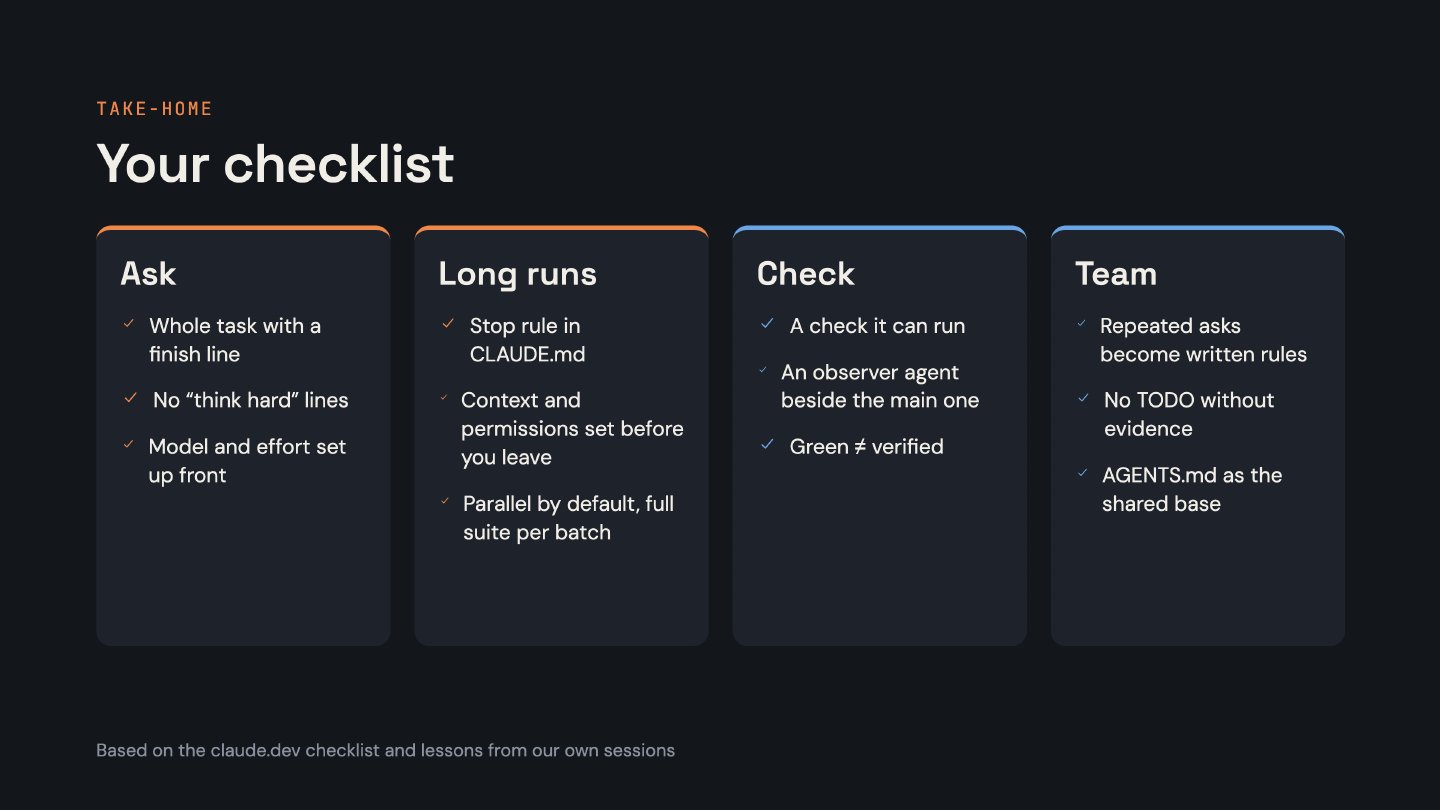
- Ask – the whole task with a finish line, no “think hard” lines, model and effort set up front.
- Long runs – a stop rule in
CLAUDE.md, context and permissions set before you leave, parallel work by default with the full test suite per batch. - Check – a check the agent can run, an observer agent beside the main one, green is not verified.
- Team – repeated asks become written rules, no TODO without evidence,
AGENTS.mdas the shared base.
Most of this is based on the Claude Code best practices, the Anthropic prompting guides, and lessons from my own sessions.
Thank you to the CoTransition community for the invitation and for the good questions!